Category: LIFE STORIES


Peruvian_Caballo0003

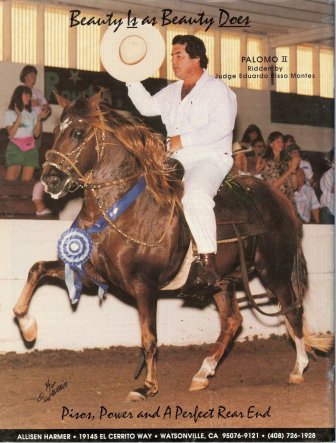
The Peruvian Paso or Peruvian Horse is a breed of light pleasure saddle horse known for its smooth ride. It is distinguished by a natural, four-beat, lateral gait called the paso llano. This breed is protected by the Peruvian government through Decree number 25919 of Peru enacted on November 28, 1992, and has been declared a Cultural Heritage of the Nation by the National Institute of Culture (INC).[1] Due to the isolation suffered for about 400 years and the selection made by their breeders, this breed is very particular in their body proportions and a side walk or “paso llano” that is characteristic. It is typical of the northern Peruvian regions of the country from which he originated [Wikipedia].

In 1998 I had acquired a registered Peruvian Paso mare called SIRENITA. Señorita Sirenita was a lovely little dark bay mare, small even for her breed who are smaller horses, very elegant with a nice smooth Paso Llano gait (a distinct inherited, andcompletely natural four beat lateral gait ), eager to please and with Brio (qualities of boldness, exuberance and astute focus in service to the rider). One says, “riding a Peruvian Paso with a glass of Champaign in one’s hand should not spill a drop of it.”

Sirenita when I bought her had been 4 years young only. Trained by a professional Peruvian trainer at the Ranch where she was foaled. I brought her to my Ranch in Alberta NW of Calgary in the Foothills of the Rockies, together with a companion mare, to keep her company. I rode Sirenita her in the forests (my 80-acre Ranch was surrounded by miles of Crown Land, lots of space) and the trails. She was easy to get along. 1999 we had her bred by one of the class stallions at her home Ranch, RDLF DON RODOLFO, also a dark bay stallion, bred as so many Peruvian Pasos in California Rancho de la Florecita.

It is difficult to trace Peruvian Paso’s bloodlines as there have been in the past little recordings. Good sources for more information are http://www.napha.net/DatabaseAppCode/NaphaWebSite/NAPHA.aspx?&height=800 , and http://www.peruvian-pasos.com/horses.html .

Before Sirenita was due with a foal, I had brought the two mares to her home Ranch because with their hundred or so Peruvian Pasos they had the better foaling facilities. My beautiful little SIRENITA had a tiny little foal exactly on Mother’s Day, May 14, in the year 2000. And the other little miracle was that the foal – who was a colt – turned out to be sorrel in color, a beautiful golden bronze color, unlike his parents, who had both been dark in color.

That’s where the real story starts, with training a horse baby. After the night the baby was born I drove down to their ranch, sat in their stall – it was quite an emotional experience for me. I had horses for so many years, but never a foal. He was so little (her first) that he disappeared under her belly. Of course horses are very shy of humans, and when unknown they take flight of anything and anybody. However, it is important to start contact immediately with a tiny foal after they are born. It is part of the process of getting to know each other. In horse parlance this process is known as IMPRINTING. A learning process occurring soon after birth of a foal, the best and only opportunity to establish future behavior patterns in a horse towards people. 

I spent each day inside the stall with the little guy and aided by his mom’s cooperation, to get acquainted, to touch eventually without frightening him. You need a lot of patience for accomplishing this. In four days I could touch him, then within one week put very carefully a tiny baby horse halter on – it was pink, for a little girl, but who cares. And within couple of weeks I was able to pick up his hind legs for some light hoof care. What a guy!

I include two videos of the colt’s progression, one an audio video, made by my son Marc at Sirenita’s home Ranch – me riding the little mare and Buzzy ‘buzzing’ around her. – = Created with Firefox 19 Apr 13/13 –
OCTOBER IMAGES OF ALBERTA ROCKY MOUNTAINS

R SCHAMLE

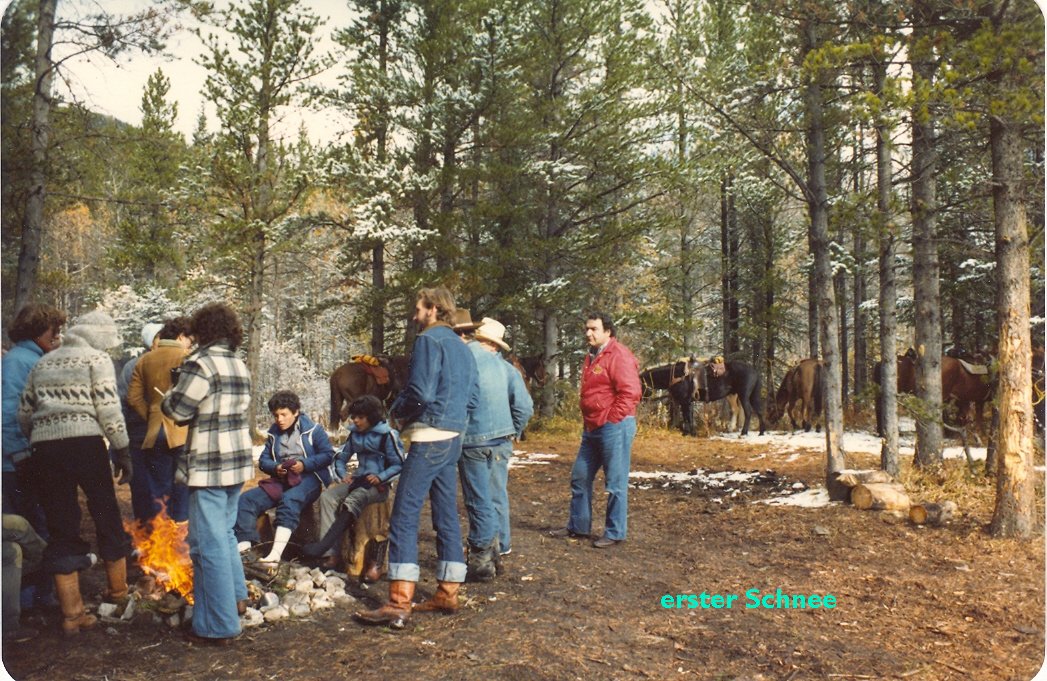
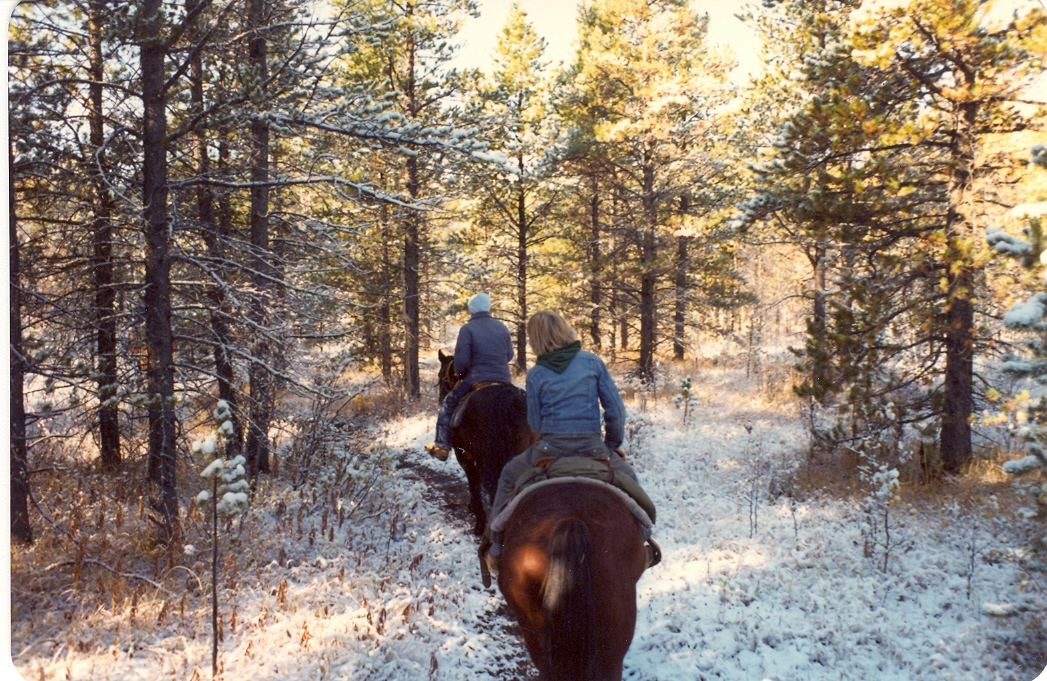
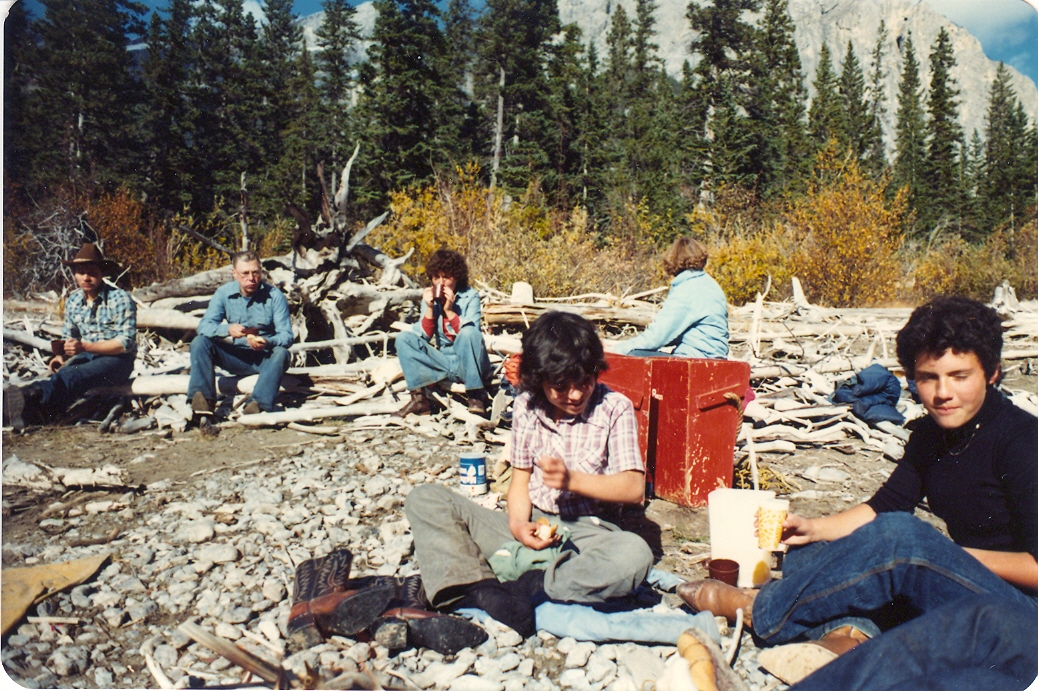
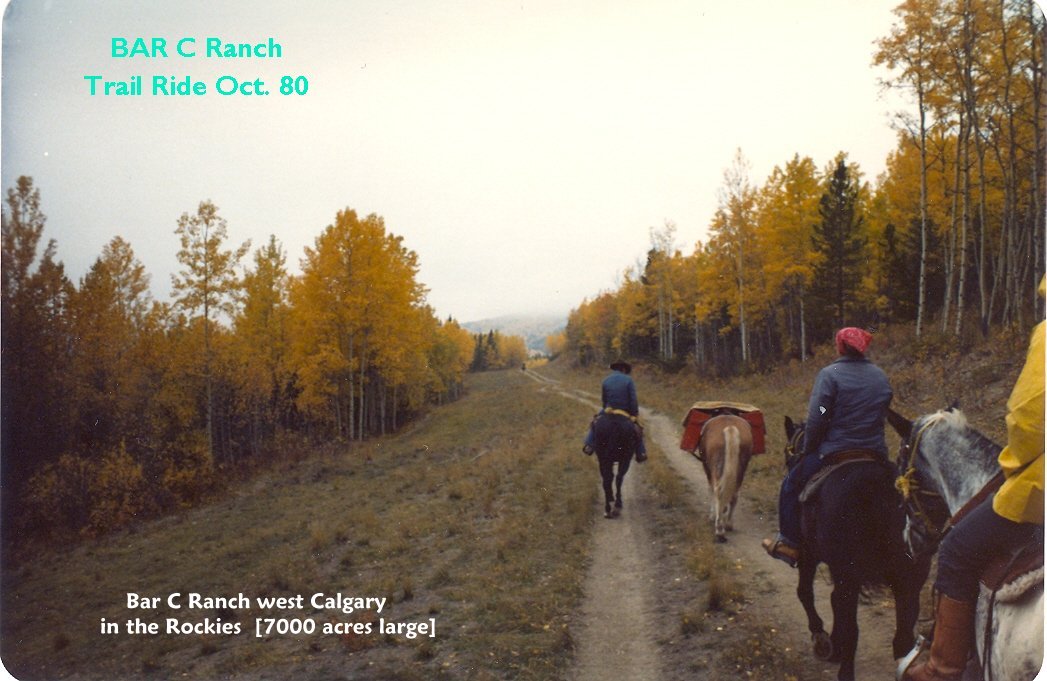
 image0002 image0003 image0004 image0006 image0009 image0010 image0012image0005This is only October. But usually in October around Thanksgiving we get the first snow in the mountains. On this trail ride the Rockies show a typical weather pattern. We started sunny, then overnight the first snow, quite cold, then the same day the sun breaks through and the mountains show themselves at their best. This ride was quite high in the mountains. I have done others towards Great Jack Lake/Banff, where overnight we needed high electric fences to keep Grizzly bears out. We then stayed overnight in army tents.

BERLIN WALL – DDR [History]

BERLIN – die MAUER

13. August 1961

[Memories of the DDR]

 Walter Ulbricht (Leipzig, 30 June 1893 – Groß Dölln, 1 August 1973), German communist politician. He played a leading role in the creation of the Weimar-era Communist Party of Germany (KPD) and later (spending years in exile in the Soviet Union) in the early development and establishment of East Germany (the German Democratic Republic). “Espousing the motto ‘it must look democratic but we must control everything’, he set about establishing an SED dictatorship.”[1] He was first secretary of the Socialist Unity Party, and as such the actual leader of East Germany, from 1950 to 1971. From President Wilhelm Pieck‘s death in 1960 he was also the East German head of state until his own death in 1973. (partially from Wikipedia). Ulbricht’s most famous statement: “Niemand hat die Absicht, eine Mauer zu errichten.”

Im Januar 1961 – vor dem Bau der Mauer – war ich mit meiner Freundin (einer Berlinerin) auf dem Wege von Braunschweig nach West Berlin, per Zug. [NOTE.The West Sektor was formally established on 1 July 1945 defining the boundary between the Western and Soviet occupation zones of Germany. On the eastern side, it was made one of the world’s most heavily fortified frontiers, defined by a continuous line of high metal fences and walls, barbed wire, alarms, anti-vehicle ditches, watchtowers, automatic booby traps and minefields. It was patrolled by 50,000 armed GDR guards who faced tens of thousands of West German, British and U.S. guards and soldiers.]

Wie gesagt: wir fuhren bei Zug. Zu dieser Zeit war ich als Informations Spezialist tätig bei dem Deutschen Luft- und Raumfahrt Zentrum, DFLR, Waggum bei Braunschweig [http://www.dlr.de/dlr/desktopdefault.aspx/tabid-10254] .

Mit dem Zug nach West Berlin zu fahren bedeutete, durch den Ostsektor zu fahren, um in den Westen zu kommen. Zu diesem Zwecke wurden Spezialzüge gebraucht, die mit schweren Stahlplatten auf Bodennähe versehen waren, damit niemand sich da unter hängen konnte, um aus dem Osten zu entkommen. Nahe der Grenze hielt der Zug, um VoPo’s (Volkspolizisten) durchzulassen zur Kontrolle von Reisenden. Das Beste war, sich klein zu machen. Ich hatte zur Vorsorge alle Ausweise von der DFLR zurückgelassen und wies mich als simple Sekretärin aus. Keinen Augen Kontakt mit den VoPo’s zu machen war wichtig. Die waren alle schwer bewaffnet.

DEUTSCHE gegen DEUTSCHE.

January 1961 we took the train from Braunschweig to Berlin, West Sector. Those were special trains with heavy metal grates fastened underneath to prevent East Germans to escape by laying underneath. (like the old Wild West.) At the border, trains were stopped, passengers checked by heavily armed VoPo’s.

The Berlin Wall – die MAUER, wurde 1961 errichtet und war am 13. August 1961 fertig. Im August war ich schon in München. Habe dort gearbeitet. Wegen der schweren Aggressionen der Sowjet Union – die täglich mit Jets über Berlin flogen, die Schallmauer durchbrachen – flohen viele Berliner in andere Städte, besonders auch München.

[More re. Stasi, Vopo, Berlin Wall in a future post]


ALBERTA WINTER

ALBERTA WINTER

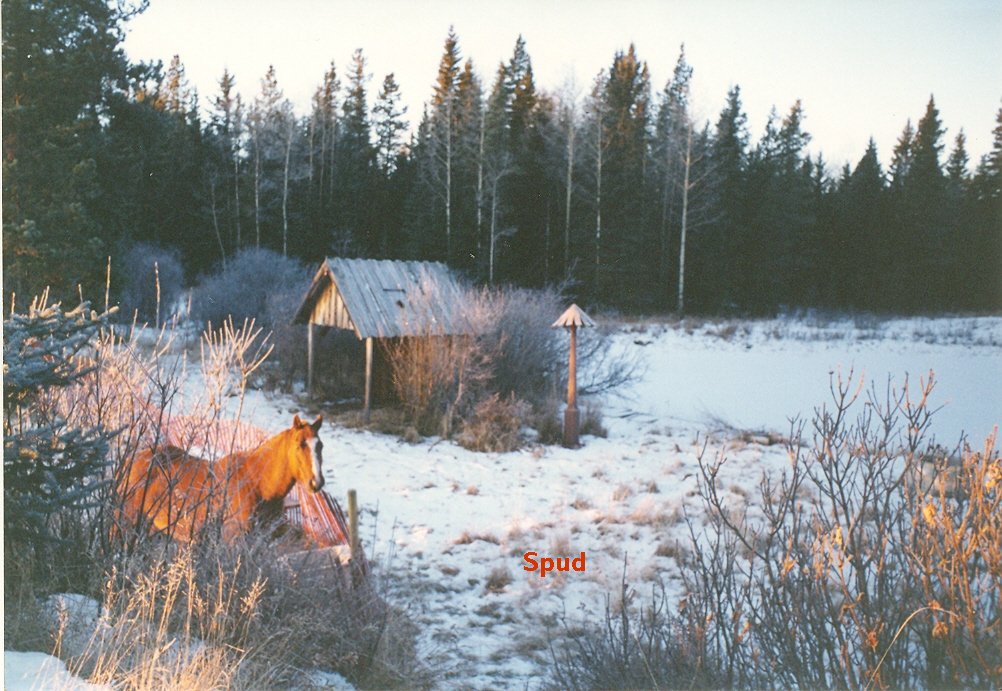
Image Although I feel for those poor souls in Europe, and their snow and cold troubles, I have to admit what comes in mind is: “There is no such thing as cold weather, there are only wrong clothes.” (As we always say here in Canada where snow and cold can occasionally last from between September and June in certain areas, especially Alberta.).In Alberta, the last heavy blizzard usually arrives in May each year. Despite, Alberta is one of the most beautiful Western provinces. No wonder that many movies – Westerns – are made right there.

For over 25 years I lived in the Rocky Mountain Foothills, west of Calgary.

Remembering the winter of 1997 – minus 50 degrees Celsius for a week. I had a ranch and horses, and they had to be fed. Getup at 5 in the morning, go out there with heavy clothing, and lug some hay bales around to the guys.

I also recall the many months I had to work up north on a computer contract, travelling 400 km one way between southwest of Calgary and downtown Edmonton. There were times I saw dozens of cars in the ditches, upside down and inside out, myself almost the only person on the highway – driving slow, slow (30 km/hour) to get there.

Then again we also had good times. When still living in the midst of the Kananaskis Country southwest of Calgary (best ski areas around), we often went out with the horses, wearing very heavy clothes when riding, then stopped somewhere, made a fire, and had something to eat and drink.

One can adjust to the situation. One can also find it good exercise to have to dig out a car, or shovel snow.

Since 2002 I am living in Victoria, Vancouver Island, Canada’s Pacific west coast, milder weather. Sometimes even miss the snow.