Latest Entries »

Travel – value for money

Before planning a voyage, what is most important ? not only deciding on the destination, but planning the entire package and logistics. The question mostly asked by most is: “do I get value for my money ?” Because, let’s face it, most of us are restricted by a budget.
In my many years of traveling, I mostly traveled alone, except for that particular year 2012, when I decided to purchase a complete trip package directly from the (overseas) agent.
Examples of value for money:
One entire month in a resort by the Gulf of Hammamet, Tunisia, all inclusive, a bright big room with terrace on the second floor facing the ocean, two large swimming pools, daily and nightly entertainment, all day food and drink (bottled water, wine, champaigne) – all included. Also included return flight from and to Frankfurt/DEU and a full-coverage travel insurance with emergency health. All of this for 1.046EUR ($1,500). I only had to add return flight from/to Canada
There is a deal.
Another deal: Cruise from Vancouver to San Francisco, cabin with balcony (double occupancy), return flight for two San Francisco to Victoria, pickup at home, and nice hotel room on the Wharf, San Francisco. Per person CAD$900. We only needed to buy the food for the three days in San Francisco.
Another one: Eight days St. Petersburg, return flight Berlin, Hotel Moscwa, food, dinners, lunches, daily guided tours, admission to Eremitage [ http://de.wikipedia.org/wiki/Eremitage_%28Sankt_Petersburg%%5D and many palaces. Around 1.000EUR. (Russian Visa around 50).
I do not understand why travel medical and emergency insurance costs three or four times as much when bought in North America instead of in the destination country.     


Continuation of Part One {Alberta-Montreal}. Québec, still the largest province within Canada, and also the name of its Capital, La Ville de Québec/Quebec City. Situated high up on Cap Diamant, and looking down on the mighty St. Laurent River. Quebec, the cradle of French civilization in North America, distinct from the rest of Canada’s subdivision areas in terms of language and culture – French.
Why I love its capital city La Ville de Québec is, because of its special charm and uniqueness. Founded over 400 years ago in 1608 by Samuel de Champlain [ http://en.wikipedia.org/wiki/Samuel_de_Champlain ], the city today has still retained its many stone walls and structures. Built high up (I believe 200 steps to climb up to La Haute Ville – the upper city), winters can tend to present a challenge. Therefore, houses have largely steeply slanted metal roofs, so that the ice and snow can slide off easily. When visiting the city in 2002 (previous visits during 1986), I slept overnight in my mini van somewhere at a quiet outside area. No problem.
When I visited again in 2008 for the 400 year celebrations of that city, I also took the time to check out some real estate. Amazingly, some of the old stone churches (Quebec is largely catholic) had been converted to condominiums. I walked up one such with an agent. It is narrow and with a steep staircase to the upper floor bedroom. A challenge as well !
My visit in August 2008 was one month long. I had then rented a suite with kitchen in one of the University of Quebec dorm buildings, E.Fleurie Uni. Quebec. Wonderful experience, all new modern furniture and kitchen, very nice admin staff on site. I paid $200 a week. Nearby the main Library (La Bibliotheque de Quebec rue Saint-Joseph Est, La Roche. Quebec has one of the largest networks of higher education institutes and universities in Canada. Also nearby a Dollar store. Very handy. Daily trips to Upper City (Haute Ville), climbing either steep streets or stairs built into the rock structures, returning to Lower City (Basse Ville). The city’s historical old walled-in section is in contrast to the other large modern buildings that make up this historical Capital. La Ville de Quebec has also one of the most beautiful and unique train stations.
In 2008 during the 400-celebrations of the city, daily activities (extending throughout the entire year 2008) fantastic sights , celebrations and presentations with folks from all over the world performing and visiting. Special events included the Grand Military Tattoo with many visiting international bands, and for the first time out of their country The Russian Army Choir and Parade Band. Because of their beautiful music everybody followed the Russians (like “Der Rattenfänger von Hameln”) back to their buses.
Couple of slide shows from this extended visit to Quebec in 2008 – incl. side trips to the Chutes de Montmorency (water falls) and north to Tadoussac, whale watching. [ http://www.traversiers.gouv.qc.ca/ferries/tadoussacbaie-sainte-catherine_14.php ]

Bicycling – little tips

BYCICLING or Cycling – one of the most rewarding activities and exercises. Once the bitter cold slowly gives way to (rather late spring), we see more bicycles on the road. Not like in some European countries, though, which have more bicycles on the road than automobiles. Here, just a few. But we are blessed with a rather long out-of-city (Victoria, Vancouver Island) trail system, shared by bicycles and walkers. Because there are not so many bicycles sharing the rather busy vehicles road system, nor are there sufficient inner-city dedicated bicycle lanes, cycling becomes more dangerous. Road safety tips:
Always wear brightly coloured clothing – preferably bright red or yellow. Bicycle helmets are mandatory (unlike in Europe). Regularly look over your shoulder, even if you have a little rear-view mirror somewhere. Know your right ‘to share the road’ – meaning if you are on a bicycle on a major city road with three vehicle lanes, stay in the outer right lane, but not too far over; a car will always take your rightful space and push you even more over to the right. When turning right or left, use the proper hand signals.
One trick I learned that can save a life. When coming up to an intersection with traffic lights: If the light ahead is still green and, while you approach, the pedestrian light is already flashing red, I slow down already for the yellow. Meaning, never cross that intersection on yellow. In other words, not only do I look at the large overhead light, but also at the pedestrian light.
As far as theft goes; the rule is: whatever is easiest to steal, will be stolen first. Easy items are = the bicycle seat, the front wheel, anything detachable. I invented the use of two bike locks, one to lock the seat together with the rear wheel (more difficult to take in any case) and hang up my helmet with that lock. The second lock chain goes thru the front wheel, the frame and one stable object concreted in (or whatever is there to park you bike).
I also always take with me: a small bike pump and a set of Allan keys (for repairs), or even better, yet, a spare tire tube, and small change for the bus (in case my bicycle becomes incapacitated). Our regular buses all have a front rack system to mount two bikes. Which is wonderful, with those distances here. I put my bike up on the bus rack, take the bus, go somewhere, and cycle back. Going out of town into the more secluded areas (where we do have the occasional cougar), it is also wise – while cycling on the trail system – to look up once a while, not only ahead (in case a big cat looks down on you from the rocks). Not kidding, really !
In May we have the “Bike to Work Week”. I’ll be sitting that out, of course. Might be too dangerous. I cycle alone, it’s safer.  HAPPY CYCLING !

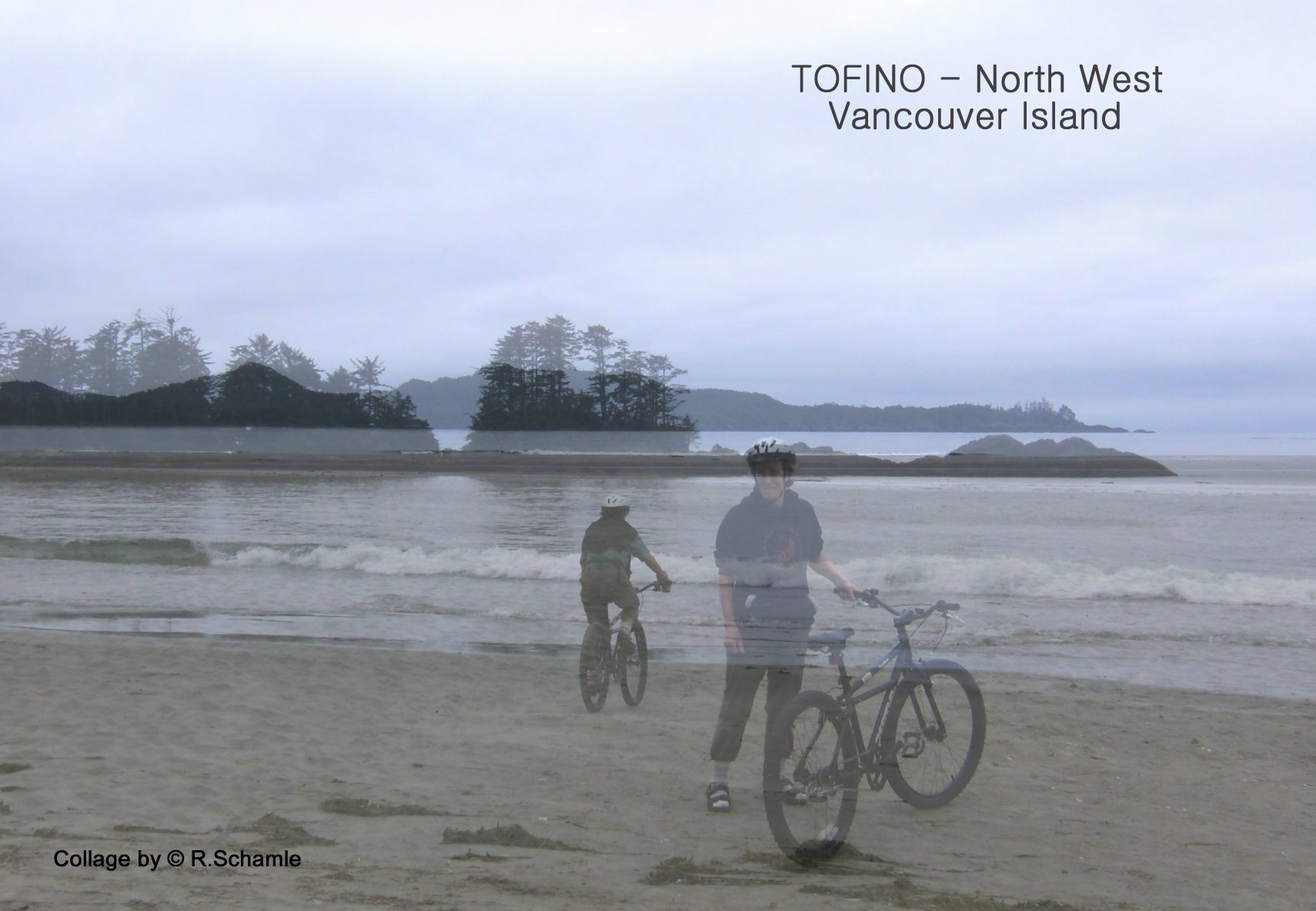
Tofino2


Canada from Coast to Coast

Canada compared to many countries is rich in nature, wildlife, natural diversity and immensity of area. The second largest landmass after Russia. True, some of the northern areas have a long winter. Also true that even some of the more southern areas suffer from bitter temperatures during the winter season. I have travelled this great country and the northern part of North America from coast to coast several times. Distances are mind boggling. Just think: With a total area of (+/-) 8,985,000 sq.km and a population density of around less than 4 per sq.km, Canada compares to Germany which has a (+/-) area of 357,022 sq.km and a population density of 235 per sq.km, like a wide open space where one can travel for days without seeing anybody or any human settlement. Wow !
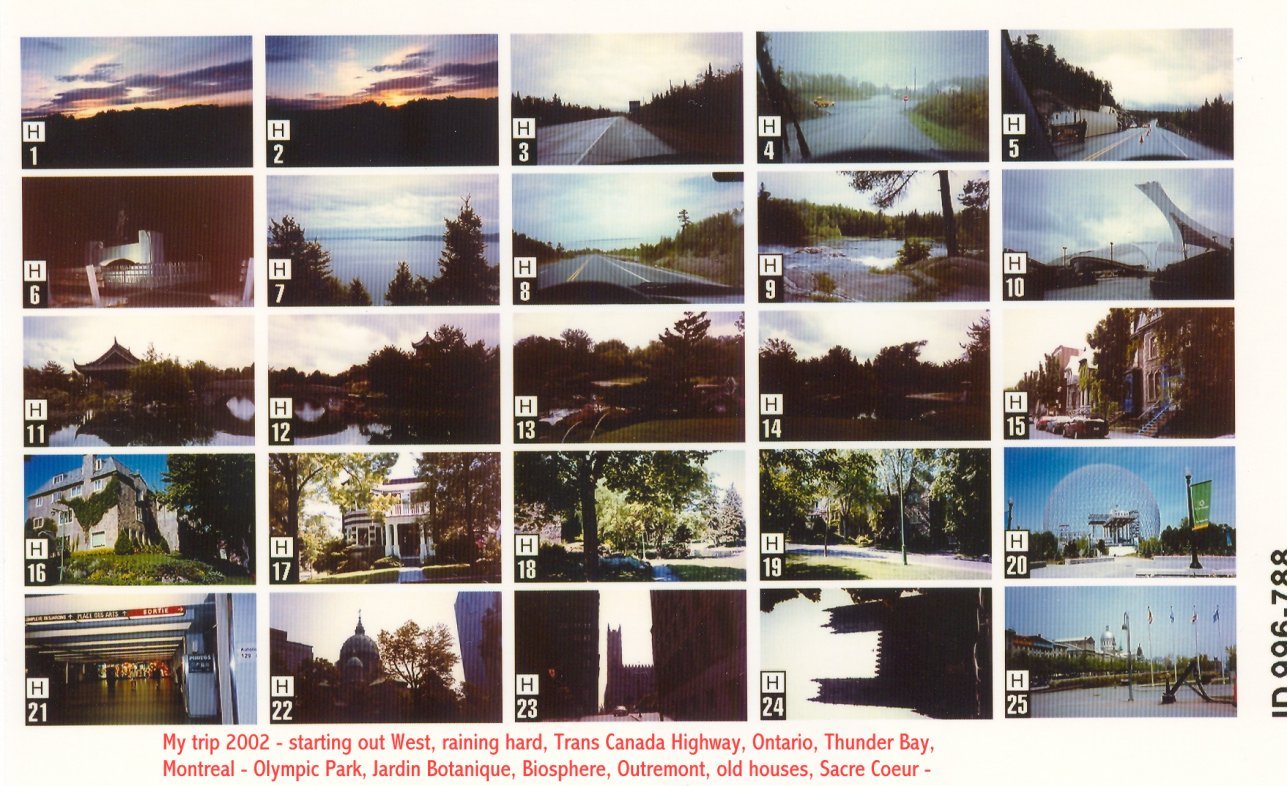
In 2002 I took the trip across, starting from West of Calgary (Cochrane) near the foothills of the Rocky Mountains and going East, using the Trans Canada Highway, then returning from the Atlantic travelling all the way back West until I reached Victoria, Vancouver Island. [ http://en.wikipedia.org/wiki/Trans-Canada_Highway ]. With my new Dodge Caravan minivan that I had customized to create my home in it. Alone and as a woman, no worries. Never once a problem. Using the nice little Dodge Caravan is handy. I had removed the inside seats to create a (foam) bed, the small rear compartment serving as a kitchen, complete with an electric one burner to cook, big canisters for water, extension cords, flashlights, first aid kids and much more. All compacted in. While the remaining seats out front served for moving my office stuff and my suitcases at night to crawl back to sleep. On camp grounds I always stopped for the shower room of course. During that year we had a lot of rain and never ending rain storms. Which resulted before I even started in that my car battery went dead on me while opening the rear hatch door too long.
The first leg of this long voyage had been to Montreal, Quebec. Usually around the Great Lakes (L. Superior and Huron) it takes – with a slow vehicle – 3 days, while from Alberta across Saskatchewan and Manitoba it can be done in a day. Starting June 2002 and arriving Montreal after 4 days and around 4,000 km later. I took my time. There were sections of the Highway which had been completely flooded from that endless rain. Coming through Ontario, sections of the Highway were closed and bridges out. I had to drive around this.
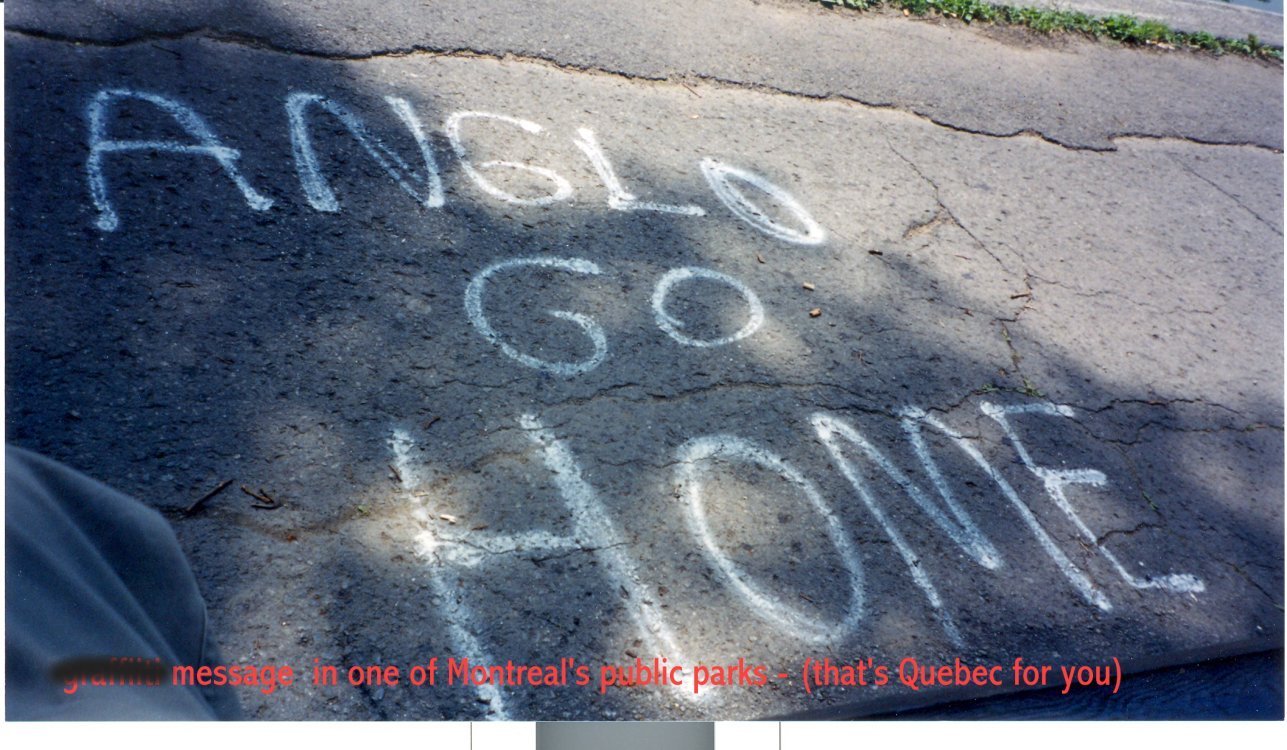
In Montreal I rented a dorm at Mac Gill University for weeks. July 2002 one of the hottest summers. It was so hot during the night that I actually slept in my van in their parking area, instead of in that room. Spending some time in Montreal, which I had visited several times before, is always a treat, especially Vieux-Montréal. [ http://www.sdcvieuxmontreal.com/ ]. [Chez moi j’ai toute une bibliothèque de livres et guides de Montréal et Québec. Util = Centre Infotouriste Centre-ville, 1255 Peel; et Infotouriste centre à Vieux-Montréal, 174 Notre-Dame Est.].
Montreal exploded during that summer of 2002 – the FIFA World Cup hosted by South Korea and Japan, and won by Brazil. Montreal has a large number of Brazilians. All major city streets were closed and Brazilians celebrating. At Mac Gill Uni Lounge we spent all night watching the games.

In between I also made a day trip from Montréal to Québec Ville, distance 230 km. Because of the tremendous traffic in a city the size of Montreal and since Mac Gill is on Rue Sherbrouke #138, the center of it, I left at 4 AM very early, to avoid the traffic. One hour to be out of the city, then onto #40 Trans Canada off to Quebec City.  This city, also the seat of Government of the Province Québec, is the most beautiful city in North America (even when considering New Orleans, LA, and San Francisco). [Ville de Québec next time more.] [This blog covers a long trip and will be continued.] trip2002AB.QU trip2002AB.QU2

Sochi Olympic Winter Games 2014

I am sure this will be a super Winter Games. Exotic location by the Black Sea, “Russian Riviera”. My last visit to one of the resorts by the Black Sea was in 1967 – long time ago. Varna, Bulgaria. That was the week of the 7-day (Israel/Arab) war in June 1967. We arriving from the Netherlands, which was pro-Israel, wanting to also visit Odessa, Russia. But no can do ! Because of that war. Instead, at that time we took the boat to Istanbul, Turkey.

Now Sochi [ http://en.wikipedia.org/wiki/Sochi ] very near the Georgian border also on the Black Sea. There is good things, and there is bad: The Good – shortly before the end of last year, the Russian Parliament has accorded Amnesty to close to 25,000 prisoners, many of those political opponents of the Regime. (Appreciated gesture.) And many newly constructed super facilities and resort hotels. The Bad – the Head of Russia is now accused of corruption as by-product of the upcoming Olympic Winter Games, in the order of close to 30 billion dollar. (But then again, who is not ?) [Needs to be verified.]. More bad are the expected threats to the Games. Latest news: [ http://worldnews.nbcnews.com/ _news/2014/01/23/22418216-pentagon-will-send-two-warships-into-black-sea-in-case-of-olympic-terror –]

I like the Sochi official web site for the Games = [ http://talisman.sochi2014.com/en/ ]. Neat little videos showing the mascots. Among those, the Leopard.

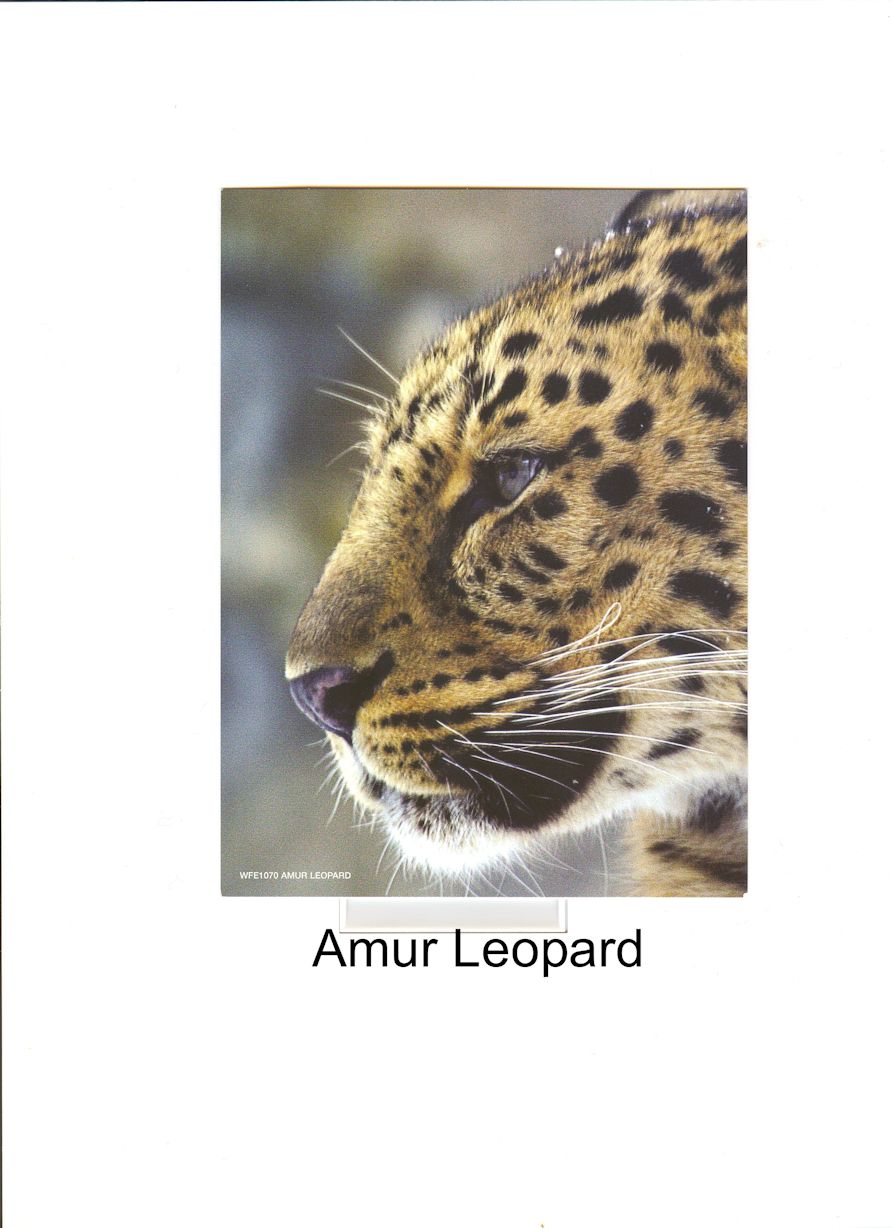
The Amur Leopard (from the most easterly Amur region of Russia by the Pacific) one  of the very endangered wildlife species. Also, my most recent symbolic adoption on behalf of the World Wildlife Fund (I have a half a dozen of those adoptions). Almost the same day that I adopt my beautiful Amur Leopard, one more of those charismatic big cats has been killed in China [ http://phys.org/news/2014-01-rare-amur-leopard-china.html ]. Very distasteful, all that killing of endangered wildlife !!!amurLeopard0004

To get a decent flight from Victoria, Vancouver Island south – even if it’s the same coast line – to Mexico, Puerto Vallarta (or anywhere thereabouts) is not so easy. Most flights take two days. But, good news: it can be done in one day. I went November/December 2012 to spend six weeks in Sayulita [ http://www.sayulita.com/ ], north of Puerto Vallarta, Mex. Taking West Jet Airlines. From Victoria International Airport (YYC). Meaning, get up early in the morning, catch the Victoria Airporter Bus from the nearest Hotel in Victoria (cost is only C$19) to Vic Airport. Flight leaves at 7:00 AM, arriving Calgary AB 9:20 AM (this is only a one-hour flight; Alberta is a different time zone already). At Calgary (which is the hub for all flights going to Pto. Vallarta) there is a good 4 hours layover at the airport. Met my old friend there at Tim Horton’s Cafe. From Calgary at 2:00 PM to Pto. Vallarta non-stop to arrive there at around 7:00 PM, when it’s dark in Mexico. Sayulita is a smaller fishing village and tourist hub for surfers just north of Puerto Vallarta [ http://en.wikipedia.org/wiki/Puerto_Vallarta ].

When arriving at Pto. Vallarta airport, it is not necessary to catch a taxi cab (to go north) by traversing the highway and walk over the overpass to the other side. Taxis are just outside waiting once one gets through the airport security and bypass all the other commercial facilities (trying to sell you time-shares or other). There are also inside the airport taxi booths where you can rent a taxi. Not necessary, though. All taxis are controlled at the airport exit, so no over-charging can occur. There are standard fares for Sayulita US$50. Takes a couple hours by cab through the jungle and in the dark. I was lucky and used to always travel alone. Plus had informed myself beforehand via which villages we should travel. The young taxi driver was very friendly (as all Mexicans are), amused that I was nervous. When he stopped at one of those large grocery chain stores OXO on the way, asking if I want to buy some groceries for the next morning, I declined (“no way do I get out of this cab.”) Arriving Sayulita around 9 PM. In the dark we finally found the building, a big mansion uphill, where I had reserved my suite. Of course, the main gate was closed. Lucky, my taxi driver had a cell phone and could call inside. Lucky also, the US owners were still in the building that night. So, we could get the gate code to enter. The young man even carried my two small suit cases upstairs to my suite. Return from Sayulita to Pto. Vallarta Aeropuerto take the bus, it is cheap, about 40 minutes or less.

As long as I can remember I have been reading books. My mother used to have a large library of books, in a solid oak book case along the living room wall. All books were behind glass. The books I read when I was only 9 years old where history adult books. There was always a fascination for history and the lure of the international world, strange and far away cultures and countries. 
Notwithstanding the quote hanging on my wall (pressed in wood): “On apprend plus dans les Bois que dans les Livres.” (you learn more from nature than from books), I have to admit that there is a lot to learn from books. I may even go as far as to say: “all good people have libraries in their homes and they read”.  For me a home is not a home without walls of book cases filled with books. We are not talking about paper backs, or the odd books one takes out at the local library. I am blessed to live near the Central Public Library in Victoria, BC. Despite my many own books, accumulated in many languages throughout my life, I am an avid borrower of the books in our library. They come in many languages and are among the best classic and newly published editions one can imagine. The way I see it, “when choosing a book to read, I am expecting to learn from it”.  Bad language won't do at all. A book has to be intelligent, imaginative, informative and interesting enough that you do not put it down.  When I was still in Europe, I belonged to a good Buchgemeinschaft, acquiring the latest in science, religion, sociology, psychology, philosophy, history, and politics.  Later adding travel books. And an entire library in itself on horses, the American West and the history of the  North American Natives. During the time of post-war WWII there was a lot going around with communist activities and actions. We picked up tracts at the largest universities – those are all pamphlet books which are neither for sale, nor on loan at any library. Of the classic writers, my favorites are the Russian authors. It is always said, that any private collection should include those three books:  Le Petit Prince (Antoine de Saint-Exupery), Karl Marx: Das Kapital; and the Bible (which I do not have, but instead “The Bible in History”). 
Do I want to get rid of my books, because some acquaintances are telling me so ? No. I always get suspicious if someone telling me “why don't you get rid of your books ?”  Doesn't that remind you of certain evil people in history, who were burning books ???
In my international travels, be it in Europe or anywhere in North America, I always – when renting an accomodation somewhere to stay – will choose a location near a library. And get myself a library card.  Of all plastic cards, a library card is the important one.  Be it Grande Bibliothèque Montreal, QU, Bibliotheque de Quebec, R. Saint-Joseph Quebec City, Konstanz Germany, or even the most beautiful of them all The Library of Congress in Washington DC, where I also got myself a library card. For me it is easy to do so, if not for the very reason of having completed my Master of Science in Library Science at the University of Syracuse, New York. So, whoever is suggesting “to get rid of my books”, I am telling them “this is Adolf Hitlerism”.
Talking about 'book burnings': Thousands have taken place from Antiquity throughout the centuries [ http://en.wikipedia.org/wiki/List_of_book-burning_incidents ]. Yet, I cannot imagine one intelligent person who does not enjoy reading a good book. When it comes to books, I prefer the written on paper kind, not your Amazon/Kindle Fir hand held e-books type. Where books also come in handy: Languages, learning and maintaining one's own mother language. Just as travel opens your mind, so does a good book. 

Saint Petersburg Russia visit

Before the city was built, the area was still a part of Novgorod, dating back to the 9th century, a trade center by the Baltic Sea. Peter The Great (Пётр Вели́кий, Pyotr Velikiy 1672-1725), the builder of the city, was instrumental in opening the city to its Western influences. One of Peter’s main goals was to regain access to the Baltic Sea and Baltic trade. In 1700 he started the Northern War with Sweden, which lasted for 21 years, and resulted in a victorious Russia taking the vast lands on the Baltic coast as its spoils of war. During the course of the war St. Petersburg was founded (1703) on the delta of the Neva River. It truly became a European centre of culture. Peter designed the city as another Amsterdam and Venice. Having visited St Petersburg recently and also having lived in Holland eight years and visited Amsterdam many times, I can say it is in many of its aspects reminiscent of the streets of Amsterdam, with the difference that the grand boulevards (such as the nevsky prospect [ http://www.saint-petersburg.com/virtual-tour/nevsky-prospect/ ]) in St. Petersburg are of a much grander scale. I walked it from the shores of the Neva back to Hotel Moskwa. This is a city I would always enjoy to re-visit.

I had joined an organised tour group from Germany – flying from Berlin to Saint Petersburg with Rossiya Airlines. Our group then met at St. Petersburg’s airport. It is almost imperative to go with a tour group, because of the wealth of cultural sights this city has to offer. I would have missed many where I to do this on my own. We stayed at the Hotel Moskwa, a huge (couple of blocks long) hotel, so big that it feels like a small city when coming down for breakfast. And what a breakfast it was, huge amounts of diverse healthy foods, fabulous. The city of St. Petersburg is one of the few grand cities in European style which has so much to offer in cultural history, buildings, churches, and museum treasures. I enclose here the first instalment only of my visit: Summer Palace of Catherine The Great of Russia, Tsarskoe Selo, Pushkin, Pushkin (Russian: Пу́шкин) is a municipal town in Pushkinsky District of the federal city of St. Petersburg, Russia, located 24 kilometers (15 mi) south from the center of St. Petersburg proper,[6] and its railway station, Detskoye Selorussia_reduced

Trains and Train Stations

I love trains and train travel. Here in Canada we have the big trans-Canadians, the likes of VIA Rail (for passenger traffic), CN Rail (commercial) and the special more touristy (but very elegant and expensive) train companies (like the Rocky Mountaineer). Being on Vancouver Island on the Pacific Coast unfortunately we lost our last Island train service a while ago, but in the process to re-establish a new VIA RAIL route from Victoria to Courtney, North Island.

When in Europe (or for that matter elsewhere, wherever I can find trains service) I always take the train. It is sort of an addiction. In Europe with those millions of passengers it is a very fast sort of exercise, run down, run up, run to the platforms, hopefully find quickly where the waggon is in which I had reserved a seat. My advice: Always reserve a seat in advance; and try to get special rates or tickets in the country you travel. Do not buy your expensive rail passes in North America. I always found somebody kind enough to help with suitcases in case the station has no elevator. When I grew up in Europe we travelled a lot by train (and of course there were also those wonderful city trams, now mostly replaced by buses).  In the 1960s I had to take the train from Munich all the way to Zagreb, at that time it was still Yugoslavia. [ NOTE. After World War II Zagreb stayed the capital city of the Socialist Republic of Croatia within Yugoslavia. ]. The Soviet presence felt everywhere. [ NOTE. The introduction of the railroad to Zagreb in the 19th century was a key factor in the development of Zagreb, as was the addition of Zagreb to the Oriental Express schedule. ].  One of the longest train rides I ever made during that period. Days, no seats, I had to sit on my suit case at one end of ,a waggon. Munich, Bavaria through Austria, Czech, Roumania, then Yugoslavia. Soviet presence at all of the train stations where the train stopped. Today the trip can be done overnight. Not during those days with the older regional trains. Comes to mind the real old traditional local trains out of London, UK, during the end of the 1950s, seats in plush velvet.

I put together several slide shows of train stations and trains for the period from 2001 until 2012. One of the most impressive trains today is the ICE 3, Germany’s DB high-speed trains. [ http://www.railfaneurope.net/ice/ice3.html ] . VIA RAIL passenger service across Canada, little tip: put on some warm clothes and socks. The train between Montreal and Quebec has strong air conditioning, quite cold. One of the most beautiful train stations is the Gare Du Palais of Quebec Ville, Quebec, Canada. A veritable castle.  

Orca – Blackfish

Blackfish” is the English translation of a word Pacific Northwest indigenous peoples gave to killer whales or Orca, holding them in respectful regard while keeping a traditional safe distance. [ http://notmytribe.com/2013/blackfish-has-a-name-its-tilikum-thats-mister-tilikum-to-you-kemosabe-839413.html ]

Myths: (1) Orca or Killer Whales are fish. No. (2) Orca are aggressive enough to attack humans. NO. The only attacks on humans, some fatal, occurred by Orca’s in captivity. This, one has to understand. (3) The large back fin of the orca always flaps over. NO. Only in orca’s in captivity. (4) The orca has one of the largest brains within the animal world. YES.

I was privileged enough to meet these wonderful creatures in 1978 when I and my little son visited Victoria, BC in Canada NW Coast, when the Marine Park SEALAND OF THE PACIFIC – Oak Bay Marina – was still in operation. One of the major attractions has been Tilikum, a big beautiful bull whale. All whales, it should be remembered, were kept in captivity in cages. They were also at that time thrown together independent of their ‘family’ or pod relationship, a dangerous concept because of frequent infighting among the animals.

Tilikum (“Tilly”) had been involved in several deadly attacks on humans. While at Sealand of the Pacific, he with two other orca’s submerged the trainer Keltie Byrne who subsequently drowned. That tells you: “do not play with 12000 lbs of killer whale assuming that they are only song birds.” These whales were frustrated with their captivity, their stressful lifestyle (kept at night in 20×30 metal pens), and the unnatural acts they were asked to perform for the public’s enjoyment. [ http://en.wikipedia.org/wiki/Sealand_of_the_Pacific ]

SEALAND closed down 1993. (This facility like similar others for large marine animals had a dark history of acquiring their whales: separating them with boats from their pods and chasing them into inescapable waters, to then trap them and move them into the facility.) It is heart breaking to see how many marine parks exist on the basis of such abuse to an extremely intelligent mammal.  

Where is Tilikum now ? SEAWORLD Orlando, Florida. His life ? He lives in isolation, deeply unhappy, an intelligent animal that craves companionship and a whale family to share. The only thing it seems he shares is his semen that is collected and frozen for breeding purposes. More shocking news in a new book with interviews by former trainers= http://www.dailymail.co.uk/news/article-2175966/Killer-whales-Seaworld-teeth-removed-power-drills-left-mourn-separated-young-claims-shocking-new-book.htmlBookmarks Toolbar .