Category: LIFE STORIES


How Canada’s war veterans of world war 2 perceive themselves in Holland. According to them: “The Dutch people remember us and are grateful for what we have done for them.”
Myself I worked, lived and had a family in Holland for many years, also re-visited The Netherlands many times. Never noticed – even in recent years – that anybody in Holland even cares about Canada in that sense, as the Canadian 90-year old veterans see themselves.
Little anecdote, several years ago, published in our news papers: Canadian war veterans – decked out in medals, berets and full wartime regalia – travelling to Holland again for some reunions. Using the train. The conductor in that Dutch train asking for the tickets. Apparently the old guys had not paid enough fare. The Conductor requested them to pay up. One of the old timers complaining, mentioning what they were up to, (and should the Dutch not let them travel for free? in the back of his mind). NO, said the train conductor, “you pay what everyone else pays”.
Big outcry here in Canada about this incident. How dare they ??

Visiting the Maghreb

The Maghreb countries Tunisia and Morocco are very special to me. I had visited Tunisia in the early 1970s. Then again in 2012. Not much had changed. The history of Tunisia is interesting. Of which the more modern events have shaped a country looking forward rather than being too conservative. [ http://en.wikipedia.org/wiki/History_of_modern_Tunisia ]. Therefore, it may have been OK to walk in light clothing as a tourist then, but would not be advisable today. Algiers, I have never visited. But following my last visit to Tunisia in 2012 I also spend one month in Morocco afterwards. And what a difference it was. In terms of customs. Morocco is more conservative. Many more women even in larger cities are covered up. Very friendly people. When they are respected.  [ http://www.moroccan-moments.com/culture/ ]
I like to advise travellers to those countries to respect the culture. As a woman particularly, do not wear clothing that exposes your legs – like shorts – or your entire arms. Your visit will be that much more enjoyed, and you will make friends. Not being loud and boisterous, but being respectful of local customs. As a woman travelling alone, stay with women, they are very delightful and friendly, even if their faces are covered up. It helps, if you speak French – second language after Arab. That’s how I made my friends. And that is how one gets around spending less for cab services and get where you want to get. Be prepared – not the whole world speaks English.

Jardin_Majorelle 008

Washington DC

Washington DC is not only one of the most interesting cities in North America, but also, one might say, “the center of the universe” when it comes to symbolism.
There is a strong mystical presence in all of the massive public buildings, many housing secretive historical collections. One of the founding corner stones of this city, the Freemasons, is also one of the most powerful brotherhoods and considered secretive societies in the world [ http://www.dcgrandlodge.org/ ]. How powerful can such an expression of symbolism become, when the Grand Father of this city, George Washington himself, had been elevated to almost ‘Godhood’. The ceiling dome of the Rotunda in Washington’s Capitol depicts the mural painted by the Italian Master Painter Brumidi in 1865 and depicts the various Forefathers as residing in Heaven as Gods. [ http://en.wikipedia.org/wiki/The_Apotheosis_of_Washington ]. (Apotheosis inferring Deification.) I believe that of all of Washington DC’s top secrets there are many, yet, hidden somewhere in this vast city of super grand buildings, many constructed based on Greek and Roman principles.
Contrary to common believe, Washington DC had not been built on a swamp. Unlike – a good comparison – Russia’s St. Petersburg, which was built on the Neva River and in many respects resembles Amsterdam in its design (thanks to Peter the Great).

I have visited Washington DC several times to visit family. Once in the summer of 2001 and then twice in 2002. When the situation had changed in the inner City and most of the famous landmarks and wonderful museums, like the Smithsonian, were now subject to elevated security measures. I also at that time did some research at the Library of Congress and obtained a temporary library card. It had been a long and arduous process. I love Washington DC especially old Georgetown, with its old brown stone houses, some from the 17th century. Georgetown is fantastic with its indoor international markets and the little Cafe’s and boutiques. And the shady old walkways along the canals. I stayed at that time near Dupont Circle, a historic District in NW Washington, one of the best areas, an easy walk to the Washington Zoo, the Smithsonian National Zoo, one of the landmark Zoo’s in the world. [ http://nationalzoo.si.edu/ ] Admission was free. As were all other buildings for tourists. At the time of my visit I had been lucky enough to also view a couple of new born baby animals, a most adorable little playful elephant, and several tiger cubs. What a treat !
I would love to re-visit, but I think it will never be the same. Near the home we stayed (an old Grey stone house) it was also an easy walk to Dumbarton Oaks Park
[ http://www.doaks.org/ ]. Very enjoyable and educational experience. What I also liked about this city are the many international book stores and Cafe/Book Stores.

Surviving Alberta Winter

Twenty seven years I spent in Alberta, north west of Calgary in the foothills of the Rocky Mountains as well as south west in the Kananaskis country [ http://www.kananaskis.com/ ]. Despite the cold winters, Alberta for me is still the most beautiful of Canada’s provinces. The landscape east of Calgary coming from Saskatchewan is rather flat and undulating, towards the mighty Rockies wide open skies and those wonderful mountains are a sight to behold. It is easy to imagine that the temperature during already cold winters is always at least ten degrees colder outside the cities. North west of Cochrane (which is the next town west from Calgary) I had snow up to five feet at times. The same when we lived almost ten years in Bragg Creek, a small hamlet south west of Calgary [ http://www.braggcreek.ca/ ], the snow was so high that I had to pull my old Dodge truck with my car over the acreage across the snow using my lariat, in order to be able to go to work in Calgary. Every morning up at 6 AM, driving down town to Calgary. When a blizzard hit the city, it had been impossible to drive home after work. I tried once, took me 3 hours slowly for twenty km. No heating in my car either.
When working up north on contracts, I needed to drive every weekend between Millarville [ http://en.wikipedia.org/wiki/Millarville ] from my large acreage to downtown Edmonton. Friday after work down and Sunday night back. Many times during that winter I was the only driver coming out of Edmonton and driving south. We called this – highway No. 2 – the ‘killer highway’ because of the many accidents occurring during iced up winter roads. I counted at times at least fifty vehicles upside down and inside out in the ditches. Driving slowly, I made it. My ranch near Millarville was steep uphill, a quarter of a mile to the house, walking and leaving the car in front of my gate. Once my front door was frozen, I had to break in else to face freezing to death.
How did we survive ? As the saying goes: “There is no such thing as a cold winter, only bad clothing.” We wore arctic clothing and heavily padded overalls – like worn in the oil fields. Long underwear of course and heavy gloves and high padded boots. I had been in Fort McMurray as well working temporary for Suncor oil company in 1987. In winter. [ http://www.suncor.com/default.aspx ]. Lucky for all of us contractors, it did not last long, as one of their buildings blew up and all contractors had to leave. Today, living by the Pacific Coast, and warmer climes, I could not take that cold anymore.

Christmas 1944

Remembering Christmas 1944 – beautiful memories for us children. It should always be remembered that it was the babies and small children that were responsible for having dropped bombs on London, or not ? I never forget. We had some sort of Christmas tree, and standing around the piano, my mother playing Christmas songs. I believe that this might have been the only night when the British and Canadian bomber planes did stop dropping onto us. The Valor and the Glory – they still revel in it today.

[from one of the millions of WW2 websites: “Flying under the cover of darkness and dropping thousands of tons of high explosive bombs and incendiaries upon the population below, the RAF sought to break the will of the German people to fight. The assaults destroyed nearly 60% of the city (Hamburg, closer by England), killed an estimated 50,000 civilians, and left nearly a million people homeless.”]. Which people are you talking about ? the babies and children and women and unarmed civilians ? My hometown was almost totally destroyed.

Construction Nightmares

For almost forty years, mostly in Alberta (Canada), I have done most of my own construction, renovations, home repairs and other mechanical/cable/stereo jobs myself. For mainly two reasons: (1) Whenever I had hired someone to do work for me, it was not done right. [As we always say: If you can’t do a job right, don’t do it at all!].  (2) In the long run, I saved myself a lot of money. Over and above I also learned a lot, about carpentry, framing, roofing, flooring, dry walling, painting, electrical and plumbing to a certain acceptable degree. If possible, never using a ‘handyman”.
Alberta jobs – because of residing outside the city – mostly involved ‘city and country’ type of construction, which is different from city type of projects. Including miles of fencing and clearing land. Septic tank, underground septic pipes, well and pumps, large (electrical) transformer work (all electrical done by a friend Electrician).
Nightmarish examples, found after moving into a new home that needed changes: Bathroom plumbing reversed (that is hot and cold taps). Building a new kitchen in a fairly new house: Bowed 2×4’s sticking out of the walls. Needed removal, drywall repaired before tiling. One example where I had hired a small crew (managed by the sellers of the barn package) to put up a horse barn. The blue prints were reversed, using inside wall measurements for the outside, inside no room for the horse stalls. Needed to change the entire barn design. Over and above, large 4 inch nails sticking out into the stall – not so healthy for a horse. Typically those types of people I had to throw off my property.
One might think that a large job in the country comes with large problems, not so. The worst, yet, had been a condo in an older building, in a city. Biggest nightmare ever. Big holes cut into drywall to attach light fixtures to the raw main wires. Plumbing totally shot, electrical likewise. Chewed up pencils used as shims in the closet doors. To just start renovating and improving, I needed many months of repairs. Doors cut too short when ordered, did not fit. Needed to rebuild closets instead to make doors fit. On and on.
It is common knowledge in many parts of North America that construction costs are extreme, because of certain practices whereby money is skimmed off by those who supply the workers, but in fact do nothing themselves. Overhead, it is called. We, as customers paying for unnecessary overhead. Workers ? Although unionized, but not paid enough by those who shovel your hard-earned money into their pockets. In the old days, everything was nailed, a nightmare in itself. [According to: “Give a man a hammer and he treats everything like a nail.”]. The worst, yet, are those armies of ‘handymen’ (retired old guys) who take unsuspecting senior citizens ‘out for lunch’ (ripoff). They waltz into your home, do some work, often do not have their own tools, and always want to get paid in CASH. It is a criminal offence to practice tax avoidance. Write that behind your ears, Mr. Contractor !

Over and above, the worst is those kind who come on to you, want to touch you (they call it hug you) with their filthy hands. As the last one did. Who should have a tattoo on each of his lower (butt) cheeks : a Swastika, and the Hammer & Sickle.

Beacon Hill Park Victoria BC

has one of the most beautiful Parks – Beacon Hill Park – just across from the Ocean – Juan de Fuca Strait, the southern end of Vancouver Island, looking across to Washington State, USA. We have many special birds and foul in the park – particularly colorful peacocks. Today was another sunny day, I walked through the Park taking some video’s of our birds and the Ocean.

image0013small Can they make you rich ? That’s a good one. The other day a friend asked me if it is beneficial or economically viable to have horses, not that I know what they intended to do with them. Unless you are a super rich Saudi Prince who can afford to buy expensive horses for racing or breeding, horses do not make you rich.
On the contrary. They cost a lot of money to keep: feed, stabling, exercise, and most of all veterinary care. A horse that is frightened can easily do himself in right there and then and in no time thousands of dollars are lost.
The horses I owned and worked with were all expensive registered horses. I started in Europe, The Netherlands, with sport horses. Then for many years in Alberta, Canada, I had registered Quarter Horses, one registered Paint filly and a set of pure bred Peruvians. My Quarter Horses, that I either raised and then trained, or acquired trained and needing lots of work, I also showed in Western shows in southern Alberta, Claresholm, or elsewhere. They were all cutting and reigning horses, out of Legends. In fact. some of the ancestry went back to stallions that easily got 100 thousand as stud fee. That was then.
The expenses for upkeep made me poor. As a single mother and working several jobs and professions in Alberta. For myself ? spending $25 for food a week, not for my horses, they were well-fed and taken care of. Lost my share in (fence run-in) accidents. Other costs also including expensive equipment, horse trailers, trucks, and miles of fencing I built myself. Sometime in winter, minus 30C or worse. Out in the cold – one winter it was minus 50C – getting up early in the morning, for hay and check the waterers, I wished I was dead.
Not to forget the many accidents and broken bones I acquired as a bonus. Doing a lot of the vet care myself. Have you ever seen a cowboy who is rich ? Must be kidding.
[More about my horses individually some other time.]

Annie Get Your Gun

When going on a trip meeting diverse people if often happens that the stories turn to guns. This being an ‘iffy’ subject, it is usually not wise to talk too much about my own gun stories in the presence of the ladies.
As long as I remember, following post-WWII, we were confronted by situations having to protect ourselves, not only because of the presence of American Army GI ‘s everywhere in Germany. Frankfurt – a hot place then – dangerous. I needed to spend one week a month on a post-grad IT course. Everybody had to carry some protection – be it only a little Walther UP1 tear gas pistol.**
[** Story about the tear gas pistol: In the 1970’s in Germany it happened that a very angry taxpayer went into the Federal Tax Department office, pulling out his tear gas pistol, shooting at close range into the tax inspector’s face, injuring his eyes. Law came into place, to make those guns illegal. Also, because owners of such devices modified them for shooting.]

Another gun story – [ Its ‘journey’ around the world started in The Netherlands. In the approx. 1960s. The little hand gun, a Browning caliber 7.65mm European model, here the .32 ACP [ http://en.wikipedia.org/wiki/.32_ACP ] belonged to my husband who spent years in the Indonesian war theater Koninklijke Marines Java/Indonesia long before I met him. That gun followed me around the world, ending up here. The RCMP got this gun 1980’s, it’s somewhere. ]
Years in Alberta will teach anybody in the country a bit about the long rifle. We all had them. Hunting moose and deer in winter, and shooting grouse in fall for Thanksgiving. Shotgun, hunting rifle, 22 and more. [That was all legal at that time, in conjunction with an FAC = Firearms Acquisition Certificate, and a wildlife license for hunting.] In between the periods of the Canadian Gun registry program [ http://www.rcmp-grc.gc.ca/cfp-pcaf/online_en-ligne/reg_enr-eng.htm ] . I still believe that the Province of Alberta brought down that (terribly expensive) gun registry program.
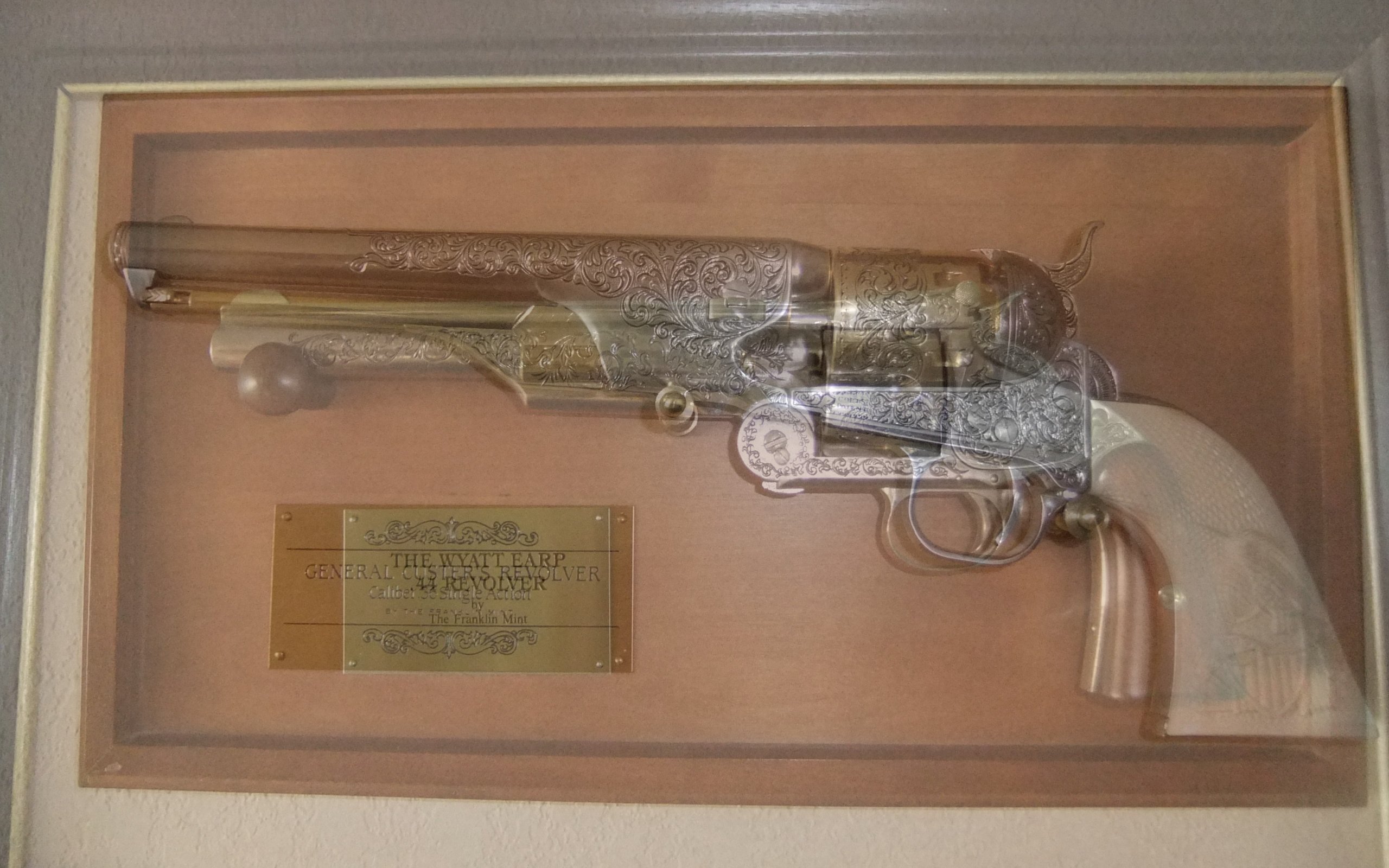
My long rifles from Alberta ending up on the coast here, and all legally sold to a gunsmith in the Highlands. Myself, am collecting antiques and collectors items now, wherever I travel. My favorites from the Franklin Mint Collectors Society: Exact re-creations of the Wyatt Earp .44 Smith & Wesson Revolver; and General Custer’s Colt .36 Model 1861 Navy Revolver. Both of these modified, so that they cannot chamber ammo.
Present regulations [ http://www.rcmp-grc.gc.ca/cfp-pcaf/form-formulaire/index-eng.htm ].

guns2

Reality of WWII

[ http://ww2db.com/battle_spec.php?battle_id=55/Bombing-of-Hamburg-Dresden-and-Other-Cities-World-War-II-Database ]

My home town – was right close to Berlin, right smack in the path of the major bomb corridor between England and Berlin – destroyed to 90 %. I was two year old when Canada declared war on me (I take this personally). And I was seven years old when the war officially ended, but unofficially continued with bombings still going on in certain areas. Hah ! Now, were those the same people who after all that destruction pretended to have invented all sorts of ‘Anti War’ symbolism ? In their little war mongering minds they may have thought that (He, it is now seventy years ago) we forgot ?
A victim never forgets ! And when I am a hundred years old I will still remember. After all, two year old babies did not start WW2, nor did they march with rifles slung over and shoot (uselessly, I might add) at the flying bomber aircraft in the air.
Of course, the bombings still continue, even seventy, eighty or who knows hundred years after 1945 [ http://www.spiegel.de/international/germany/unexploded-wwii-bombs-pose-growing-threat-in-germany-a-859201.html ].
You can read into this whatever you want, published on the Web by historians, not by people who were actually right in the middle of those bombing raids – victims, little children. So, to all those who were inside those aircraft and dropping their loads onto civilians, do not come with stories of MAKE LOVE, NOT WAR.